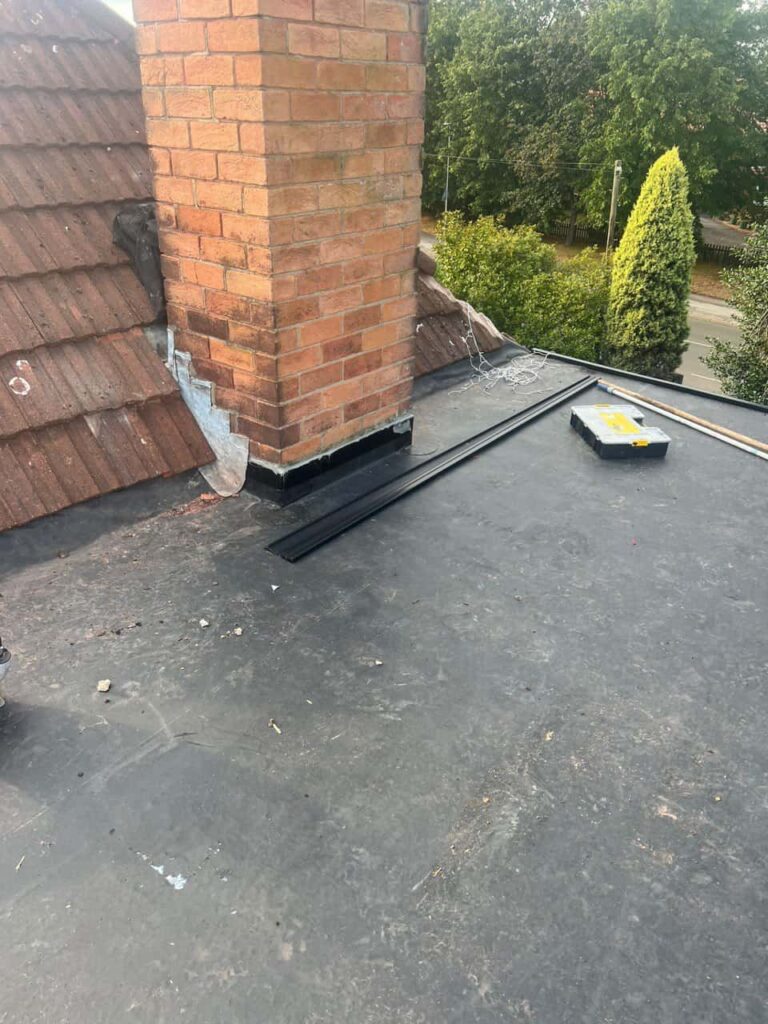
Flat roofs provide a practical roofing solution for many different parts of a property, but their performance depends heavily on the condition of the waterproof covering, supporting structure, drainage and detailing around edges and penetrations. When one of these components begins to deteriorate, water can exploit relatively small weaknesses and create problems that are not always immediately visible from inside the building.
Despite the name, a properly constructed flat roof is not normally completely level. It requires suitable falls to direct rainfall towards the intended drainage points. Problems can develop when these falls are inadequate, the covering deteriorates, joints become vulnerable or water is allowed to remain on the surface for extended periods.
For property owners in Fordingbridge, Hampshire, understanding the common signs of flat roof deterioration can help identify when professional inspection is worthwhile. The important point is to establish why the problem has developed rather than simply treating the most obvious surface symptom.
What Problems Commonly Develop on Flat Roofs?
Common flat roof problems include standing water, cracks and splits, blistering, damaged seams or joints, deterioration around edges and penetrations, localised movement and water ingress. The exact problems vary according to the type of roof covering, its age, construction and previous maintenance.
Several defects can also be connected. Poor drainage may leave water sitting on the roof, for example, while an existing weakness within the covering provides a route for moisture to enter.
Professional assessment helps establish whether the problem is confined to the waterproof surface or involves another part of the flat roof construction.
Standing Water on the Roof Surface
Ponding or standing water is one of the most recognisable flat roof problems.
Rainwater should be directed towards suitable drainage points by the roof’s falls. If low areas develop, water can remain on the surface after the rest of the roof has dried.
A small amount of temporary surface water does not automatically mean the roof has failed, but persistent ponding deserves investigation.
It can indicate inadequate falls, localised settlement, restricted drainage or movement within the supporting structure.
Why Ponding Water Should Be Investigated
Standing water can make existing roof weaknesses more significant because the affected area remains exposed to moisture for longer.
If there is already a vulnerable seam, small crack or deteriorated detail within the low point, prolonged contact with water can increase the opportunity for moisture to penetrate.
The correct response is not simply to remove the water.
The reason it is collecting needs to be understood. Correcting drainage, levels or the underlying roof condition may be necessary depending on what the inspection reveals.
Cracks and Splits in the Roof Covering
Flat roof coverings can develop cracks or splits as they age or experience repeated environmental exposure.
Their significance depends on the material, position and extent of the defect.
A small surface mark does not always mean water is entering, but an opening that compromises the waterproof layer requires appropriate attention.
Surface patching without understanding why the split developed can sometimes result in recurring problems, particularly where movement continues beneath the repair.
Blistering Can Indicate a Problem Within the Roof Covering
Blisters appear as raised areas within some types of flat roof covering.
They can develop when air or moisture becomes trapped within the roofing system, creating a visible bubble or raised section.
Not every blister immediately produces a leak.
However, the raised area can become more vulnerable to further deterioration, particularly if the surface is subjected to continued weather exposure or physical damage.
A blister should therefore be assessed according to its size, position and condition rather than simply flattened or covered without investigation.
Bubbling and Raised Areas Should Not Be Ignored
Any noticeable change in the profile of a previously even flat roof can provide useful information.
Bubbles, ripples and raised areas may indicate that different layers are no longer behaving as intended.
The problem may remain localised, but the surrounding surface should be checked.
Understanding whether the defect is confined to the outer covering or related to moisture or movement underneath helps determine the appropriate repair.
Seams and Joints Can Become Vulnerable
Some flat roofing systems contain seams, joints or overlaps that form important parts of the waterproof covering.
If these areas separate or deteriorate, water can potentially enter beneath the surface.
Because the opening can be relatively small, the defect may be difficult to recognise without close inspection.
The condition of neighbouring joints can also provide useful information. One isolated weakness presents a different situation from widespread deterioration across several seams.
Roof Edges Can Develop Defects
The perimeter of a flat roof requires careful detailing because the waterproof covering needs to terminate securely.
If edge details become loose, cracked or displaced, wind-driven rain can reach vulnerable areas.
Movement around the perimeter can also affect the appearance of the covering nearby.
Professional assessment should therefore include the edges rather than concentrating solely on the central roof surface.
Upstands Are Important Vulnerable Points
Where a flat roof meets a vertical surface, the waterproof covering needs to form an effective upstand or junction.
These details help prevent water from entering where horizontal and vertical surfaces meet.
Cracking, separation or poor adhesion around an upstand can create a vulnerable route for moisture.
If internal damp appears close to a wall junction, this area should be considered during inspection, although the visible damp does not necessarily identify the exact external entry point.
Roof Penetrations Need Careful Detailing
Flat roofs can contain various penetrations where components pass through the waterproof covering.
Each penetration interrupts the otherwise continuous roof surface and therefore requires suitable detailing.
Deterioration around these points can allow water to enter even when the wider roof covering remains in reasonable condition.
Where leaks appear concentrated near a penetration, the surrounding detail should be inspected carefully rather than assuming that the complete flat roof has failed.
Flashing Can Deteriorate Around Junctions
Flashing is used around certain flat roof junctions to help maintain weather resistance.
If it lifts, cracks, separates or becomes damaged, water can potentially bypass the intended protective detail.
The surrounding roof covering should be considered at the same time.
A visible flashing defect may be the source of the problem, but it may also exist alongside deterioration within an adjoining section.
Blocked Drainage Can Cause Water to Accumulate
Leaves, moss and other debris can collect around drainage points and restrict the movement of rainwater.
When this happens, water may spread across sections that would normally drain relatively quickly.
Keeping drainage routes clear is therefore an important part of flat roof maintenance.
If water continues collecting after an obstruction has been removed, the surface levels and condition of the roof may need further investigation.
Poor Falls Can Affect Flat Roof Drainage
A flat roof needs sufficient falls to guide water towards the appropriate drainage route.
If the falls were not formed effectively or the structure has changed over time, low areas can develop.
These sections may remain wet significantly longer after rainfall.
Where poor falls are contributing to repeated ponding, repeatedly treating the waterproof surface alone may not address the complete problem.
The underlying geometry of the roof needs to be considered.
Localised Roof Deck Movement Can Affect the Surface
The waterproof covering depends on suitable support beneath it.
If part of the roof deck moves, deteriorates or loses its intended level, the surface above can change shape.
This may appear as a depression, raised area or irregular section.
Movement underneath can also place additional stress on the covering.
Where the visible surface has changed noticeably, professional inspection can help establish whether the issue is limited to the waterproof layer or originates deeper within the construction.
Soft or Uneven Areas Can Indicate Underlying Deterioration
A flat roof surface that appears uneven can sometimes indicate a problem beneath the visible covering.
The significance depends on the roof construction and material.
Where moisture has affected supporting components, localised deterioration can sometimes develop before the full extent of the issue is obvious externally.
Surface appearance alone is not enough to determine the condition underneath, which is why careful assessment matters where unusual changes have developed.
Ageing Can Make the Covering More Vulnerable
All flat roofing materials change over time.
Repeated exposure to sunlight, rainfall, wind and temperature changes can gradually affect flexibility, joints and surface condition.
Ageing does not mean that every older flat roof automatically needs replacing.
An established roof can still contain large areas in serviceable condition while developing one or two localised defects.
The pattern and extent of deterioration should guide the repair decision rather than age alone.
Temperature Changes Can Affect Roofing Materials
Flat roofs experience considerable temperature variation because their surfaces are directly exposed to changing weather conditions.
Roofing materials naturally expand and contract as temperatures change.
A correctly installed system is intended to accommodate normal movement, but repeated cycles can contribute to deterioration where materials have aged or vulnerable details already exist.
Cracking around junctions and other movement points can therefore deserve particular attention.
Surface Damage Can Create Local Weaknesses
Physical damage to the roof covering can create an otherwise avoidable route for water.
Depending on the roofing material, sharp objects, falling debris or unsuitable activity on the surface can result in punctures, cuts or localised damage.
Some defects can be very small.
Where a flat roof has experienced an impact or other physical disturbance, inspecting the affected area can help identify damage before prolonged rainfall exposes the weakness further.
Previous Repairs Can Begin to Deteriorate
Flat roofs that have been in place for many years may contain evidence of previous repairs.
A well-executed repair can remain effective, but older patching can itself deteriorate over time.
If the same area repeatedly requires attention, simply applying another surface patch may not be the most appropriate response.
Recurring problems can indicate movement, trapped moisture or a wider defect that has not previously been addressed.
Repeated Patching Can Hide the Original Problem
A roof containing several layers of temporary repair material can become difficult to assess.
Sealants and patches may cover the visible opening without addressing what caused it.
When water ingress returns, another layer may then be added.
Eventually, the surface can contain multiple repairs while the original weakness remains unresolved.
Professional assessment can help establish what is happening beneath or around these patches and whether a more considered repair is appropriate.
Internal Damp Does Not Always Sit Directly Beneath the Leak
One of the challenges of diagnosing flat roof leaks is that water can travel.
Once moisture passes through the outer covering, it may move along components before appearing on an internal ceiling or wall.
This means the visible damp patch may not be positioned directly underneath the external defect.
Repairing only the area above the stain can therefore miss the actual entry point.
A systematic inspection looks at likely water routes and vulnerable roof details rather than relying solely on the internal location.
Damp Patches Can Be an Early Warning Sign
Internal staining that appears after rainfall should not be ignored simply because it later dries.
Intermittent damp can indicate that water is entering only under certain conditions.
Wind direction, rainfall intensity and the amount of standing water on the roof can all influence when a defect becomes noticeable.
Recording when the damp appears can provide useful information when the roof is professionally assessed.
Several Problems Can Develop at the Same Time
Flat roof defects do not always occur independently.
For example, poor drainage may produce ponding around a deteriorated joint. Water can then exploit that existing weakness.
Repairing the joint may address the immediate opening, but if the drainage problem remains, the same section continues to experience unnecessary water accumulation.
Effective repair therefore involves understanding how different defects relate to one another.
What Are the Warning Signs of Flat Roof Deterioration?
Homeowners can often identify visible changes without needing to diagnose the technical cause.
Signs that a flat roof may need professional attention include:
- Water remaining on the roof after rainfall
- Visible cracks or splits
- Blistering or bubbling
- Raised or uneven sections
- Open or deteriorated seams
- Damaged roof edges
- Defects around wall junctions
- Deterioration around penetrations
- Blocked or slow drainage
- Recurring internal damp
- Water staining on ceilings or walls
- Repeated problems around previous repairs
One of these signs does not automatically mean that the complete roof is failing. It indicates that the affected area should be assessed to establish what is happening.
Can Localised Flat Roof Damage Be Repaired?
Many flat roof problems can remain localised.
A small defect within an otherwise serviceable roof may be suitable for targeted repair, depending on the roofing system and condition of the surrounding material.
This is why accurate diagnosis is valuable.
Replacing large sections unnecessarily is not always appropriate when the defect is genuinely confined to one area. Equally, repeatedly patching individual symptoms may be ineffective where deterioration has become widespread.
The scope of work should reflect the actual roof condition.
When Can Several Defects Point to Wider Deterioration?
A roof containing numerous cracks, recurring leaks and several deteriorated details may require a broader assessment than one containing a single isolated defect.
Patterns matter.
If different sections repeatedly develop problems, there may be wider deterioration affecting the covering or supporting construction.
This does not automatically determine what work is needed, but it does mean that concentrating on only the latest visible leak may provide an incomplete picture.
Early Repairs Can Help Protect Sound Areas
One benefit of identifying flat roof problems early is the opportunity to deal with local weaknesses while surrounding materials remain serviceable.
A small opening can allow moisture into parts of the roof that would otherwise remain protected.
Timely investigation can therefore help keep repairs focused.
The objective is not to carry out unnecessary work at every minor surface change, but to identify genuine defects before continued exposure allows them to become more extensive.
Why Professional Flat Roof Inspection Matters
Flat roofs can contain several different potential sources of water ingress within a relatively small area.
A damp patch could originate from a seam, edge, penetration, flashing detail or crack elsewhere in the covering. Ponding water may be caused by blocked drainage, poor falls or movement beneath the surface.
Professional inspection considers these possibilities together.
By identifying the underlying cause, repair work can be directed towards the area that actually requires attention rather than repeatedly treating symptoms.
Flat Roof Repairs in Fordingbridge, Hampshire
At MCM Roofing Repairs Fordingbridge, we assess flat roof problems with attention to both the visible defect and the reason it has developed.
Where a flat roof is leaking, holding water or showing signs of deterioration, the surface covering, relevant junctions, drainage and surrounding details can be considered to establish the likely source of the problem.
For property owners in Fordingbridge, Hampshire, this approach helps determine whether a targeted repair is appropriate or whether deterioration affects a larger section of the roof.
Conclusion
The most common problems found on flat roofs include standing water, cracks, splits, blistering, deteriorated seams, damaged edges, vulnerable junctions, blocked drainage and defects around roof penetrations. Movement within the supporting construction and deterioration of previous repairs can also contribute to recurring problems.
The important point is that the most obvious symptom is not always the underlying cause. A leak may originate some distance from the internal damp patch, while repeated ponding may indicate a problem with drainage, levels or supporting components rather than the waterproof covering alone.
If you have noticed a leak, persistent standing water, cracking or another change in the condition of a flat roof in Fordingbridge, Hampshire, contact MCM Roofing Repairs Fordingbridge to arrange a professional assessment. We can identify the likely cause of the problem and determine an appropriate repair based on the condition of the affected roof.
Call us on: 01425 208 596
Click here to find out more about MCM Roofing Repairs Fordingbridge
Click here to complete our contact form and see how we can help with your roofing needs.